
Fire Alarms in Heritage Buildings –
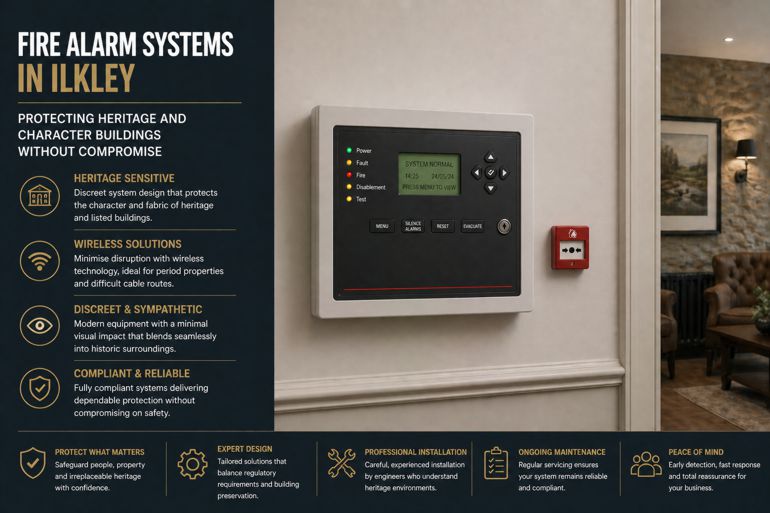
Ilkley is well known for its mix of period properties, listed buildings and character commercial premises. While these buildings offer aesthetic and historical value, they present unique challenges when it comes to fire alarm system design. Standard approaches are rarely suitable, and systems must be carefully planned to provide protection without damaging the building’s structure or appearance.
One of the primary challenges in heritage and character buildings is installation constraints. Solid stone walls, decorative features and restricted void spaces can make cable routing difficult. In many Ilkley premises, traditional wired systems may require intrusive work that is not always permitted, particularly in listed properties.
This is where wireless fire alarm systems can provide a practical solution. By reducing the need for extensive cabling, wireless systems allow for installation with minimal disruption to the building fabric. This makes them particularly suitable for heritage environments where preserving the structure is a priority.
However, wireless systems must still meet the same standards as wired systems. Reliability, signal strength and system integrity are all critical factors. In Ilkley commercial buildings, proper system design ensures that wireless solutions are both compliant and dependable.
Detector selection is also important in these environments. High ceilings, open spaces and unusual layouts can affect how smoke and heat behave. This means that detectors must be positioned carefully to ensure effective coverage without unnecessary activations.
Aesthetic considerations often play a role in system design. In customer-facing environments such as boutique shops, hotels or offices, visible equipment must be discreet and sympathetic to the surroundings. Modern fire alarm components are available in designs that blend more effectively with interior features.
Zoning remains essential, even in smaller heritage properties. By dividing the building into defined areas, the system can identify the location of an activation quickly. This is particularly important in buildings with multiple rooms or levels.
False alarm management is another key consideration. Older buildings may have environmental factors such as draughts, temperature variations or dust that can affect detection. Correct detector choice and system configuration help minimise unwanted activations.
Maintenance can be more complex in heritage buildings. Access to certain areas may be limited, and care must be taken to avoid damage during servicing. Regular maintenance remains essential to ensure that the system continues to operate reliably.
Battery management is particularly important for wireless systems. Components must be monitored to ensure that batteries are replaced before they become an issue. Modern systems provide alerts to indicate when maintenance is required.
Integration with other fire safety measures is still required. Fire alarms must work alongside evacuation procedures, emergency lighting and signage to provide a complete safety strategy.
Compliance remains a critical factor. Even in listed or protected buildings, fire safety regulations must be met. Systems must be designed to balance regulatory requirements with the practical constraints of the building.
Staff awareness is also important. Occupants should understand how the system operates and how to respond in an emergency. In smaller Ilkley businesses, this ensures that alarms are taken seriously and acted upon correctly.
Fire alarm systems in heritage buildings should be reviewed regularly. Changes in use, layout or occupancy can all affect fire risk and may require adjustments to the system.
For businesses in Ilkley, protecting a character building does not mean compromising on fire safety. With the right approach, it is possible to install a system that is both effective and sympathetic to the building’s design.
By combining careful planning, appropriate technology and ongoing maintenance, businesses can ensure that their premises remain safe, compliant and protected — without losing the features that make them unique.